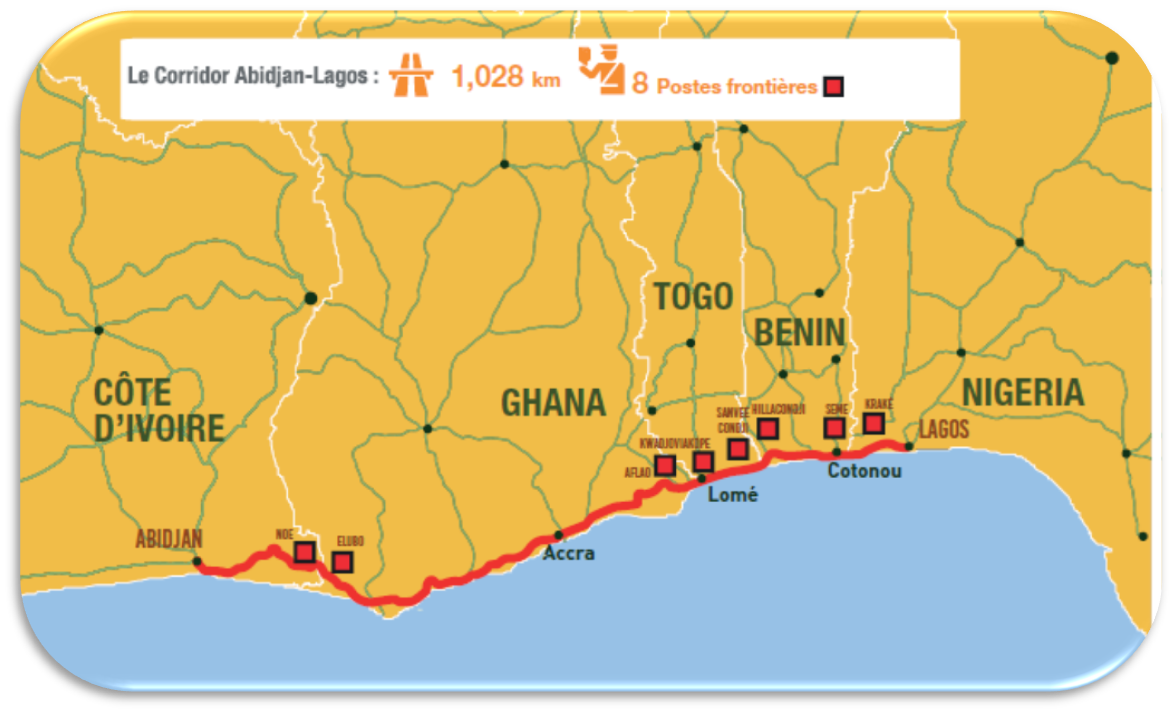
ABIDJAN, Ivory Coast, November 26, 2024/ — The Abidjan-Lagos corridor highway, a 1,028-kilometer transnational coastal motorway connecting Côte d’Ivoire to Nigeria via Ghana, Togo, and Benin, is poised to become a key economic and industrial hub in West Africa by 2030. The African Development Bank (AfDB), alongside its partners, unveiled plans for the project during a virtual workshop on November 22, 2024.
A Vision for Regional Transformation
The project, led by the African Development Bank, aims to turn the transport corridor into an economic powerhouse through the Spatial Development Initiative. The initiative seeks to stimulate industrialization along the highway by fostering economic growth and linking urban centers, secondary cities, and rural areas across the five nations.
Mike Salawou, Director of AfDB’s Infrastructure and Urban Development Department, highlighted the transformative potential of the project, stating:
“This economic corridor approach also naturally overlaps with major urban development. It will support the growth of major economic hubs and improve links between large urban centers, secondary cities, and rural areas.”
Economic Potential and Investment Opportunities
A consultancy firm on the Spatial Development Initiative identified 206 transformative interventions requiring an estimated $6.8 billion in private sector investment. Key sectors include renewable energy, manufacturing, transport, logistics, agriculture, ICT, tourism, and mining.
Chris Appoiah, ECOWAS Commission’s Director of Transport, emphasized the project’s role in regional integration:
“Our ultimate objective is to ensure that the corridor and the economic activities developed along it contribute to the ECOWAS regional integration agenda.”
Infrastructure and Job Creation
The toll-free motorway will feature four to six lanes, expanding to eight in Lagos, and will traverse major cities, including Abidjan, Accra, Lomé, Cotonou, and Lagos. The highway will include 63 interchanges and will create an estimated 70,000 direct and indirect jobs during construction, which is expected to begin in 2026.
The route will span 82 kilometers in Nigeria, 520 kilometers in Ghana, 144 kilometers in Côte d’Ivoire, 90 kilometers in Togo, and 127 kilometers in Benin, connecting densely populated urban centers and key economic hubs.
Catalyzing Investment
The African Investment Forum has been instrumental in attracting investment for the project. During its 2021 sessions, private and institutional actors pledged $15.6 billion in potential investment. The project is considered a priority for ECOWAS and is expected to link urban populations projected to reach 173 million by 2050.
Lydie Ehouman, Chief Transport Economist at AfDB, underlined the highway’s strategic importance:
“The Abidjan-Lagos highway will connect with West African transport corridors and link inland regions to eight ports in the corridor, fostering trade and economic growth.”
A Path to Regional Connectivity
By integrating urban and rural economies and promoting trade, the Abidjan-Lagos corridor highway is set to become a cornerstone of West Africa’s development, aligning with the broader vision of regional economic union and industrialization.
Construction is scheduled to begin in 2026, with the project slated for completion by 2030, marking a new era of connectivity and prosperity for West Africa.
Discover more from Global-360 Africa
Subscribe to get the latest posts sent to your email.