Study shows that more than 80% of the women interviewed had experienced some form of psychological violence in the course of their work in parliament.
NEW YORK, United States of America, October 17, 2024/ — Around the world, women often experience harassment and violence when they decide to exercise their civil and political rights.
In 2016, the Inter-Parliamentary Union published a global study on Violence Against Women in Politics (VAWP) based on interviews with women MPs worldwide.
The study showed, strikingly, that more than 80% of the women interviewed had experienced some form of psychological violence in the course of their work in parliament.
One in three had experienced some form of economic violence, one in the form of physical violence, and one in five some form of sexual violence.
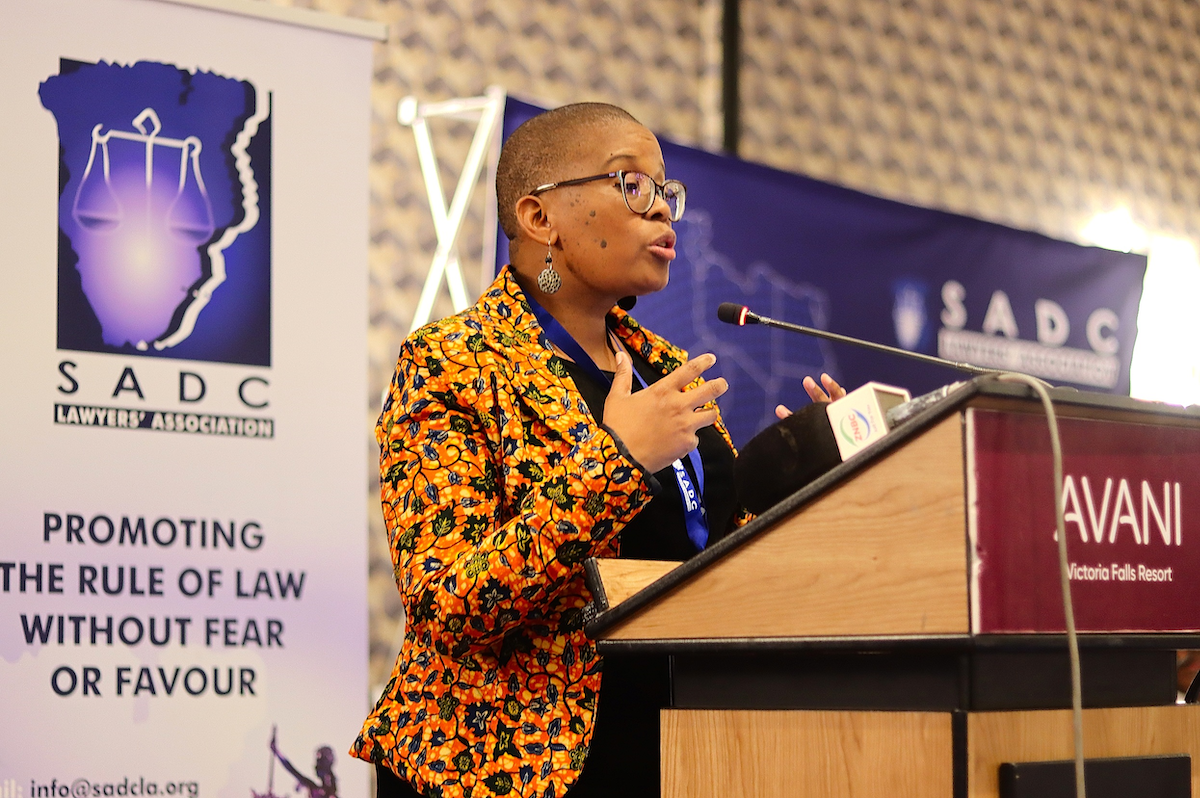
This phenomenon was discussed during an event dubbed Women’s Economic Empowerment: Focus on Gender Equality, Violence Against Women in Politics (VAWP) and the Promotion of Political Participation of Women in Elections hosted by UN Women East and Southern Africa Office (ESARO), Women’s Political Participation (WPP) Unit and SADC Lawyers Association as part of the SADC Lawyers’ Association (SADC LA) general meeting and conference, held from the 28th to 2nd August 2024 at the Avani Victoria Falls Resort in Livingstone Zambia.
This meeting provided a platform to raise awareness of women’s political participation issues in the SADC region, with parliamentarians from the region reiterating that violence against women in politics is a serious issue impacting the realization of women’s political rights and a human rights violation.
“Violence against women in politics is not a distant and abstract issue. It is a harsh daily reality for countless women striving to contribute to the SADC and African political landscape”, said Yvonne Dausab, Member of Parliament and Minister of Justice of the Republic of Namibia. “It’s a pervasive issue that undermines democracy and hinders the political participation of half of our population,” she added.
Participants reflected on the fact that much remains to be done in affirming women in politics in the SADC region while also noting the strides and progress made in the region regarding women’s political participation.
“Political and electoral violence have been viewed as gender-neutral concepts. However, these forms of violence are, in fact, highly gendered in their motives, forms, and impact on women. Violence against women in politics and elections is a violation of civil, political, and human rights. VAWP affects women’s civic and political right to participate as voters, candidates, election officials, activists, and political party leaders. It undermines free, fair, and inclusive democratic processes,” explained Women’s Political Participation specialist UN Women ESARO Maureen Shonge.
The discussion aimed at increasing knowledge and analytical capacity on VAWP among SADC Lawyers, facilitating cross-learning and exchange of experiences, deliberate broader policy and legal reforms, encouraging lawyers to contribute to efforts to prevent and respond to VAWP in their work based on internationally agreed norms, laws, and standards, and identifying areas of collaboration and coordination with lawyers in SADC and the Africa region.
Justice Sector Actors said women’s success in justice in electoral judicial processes was vital but depended on several factors, such as the affordability of judicial processes, availability of gender-sensitive judicial personnel, and accommodating participation. They also noted that the justice system was lacking in facilitating women’s access to justice, the courts were not available, accessible, and gender-sensitive, and women lacked access to legal information, with some judicial practices inhibiting women’s representation.
Discover more from Global-360 Africa
Subscribe to get the latest posts sent to your email.