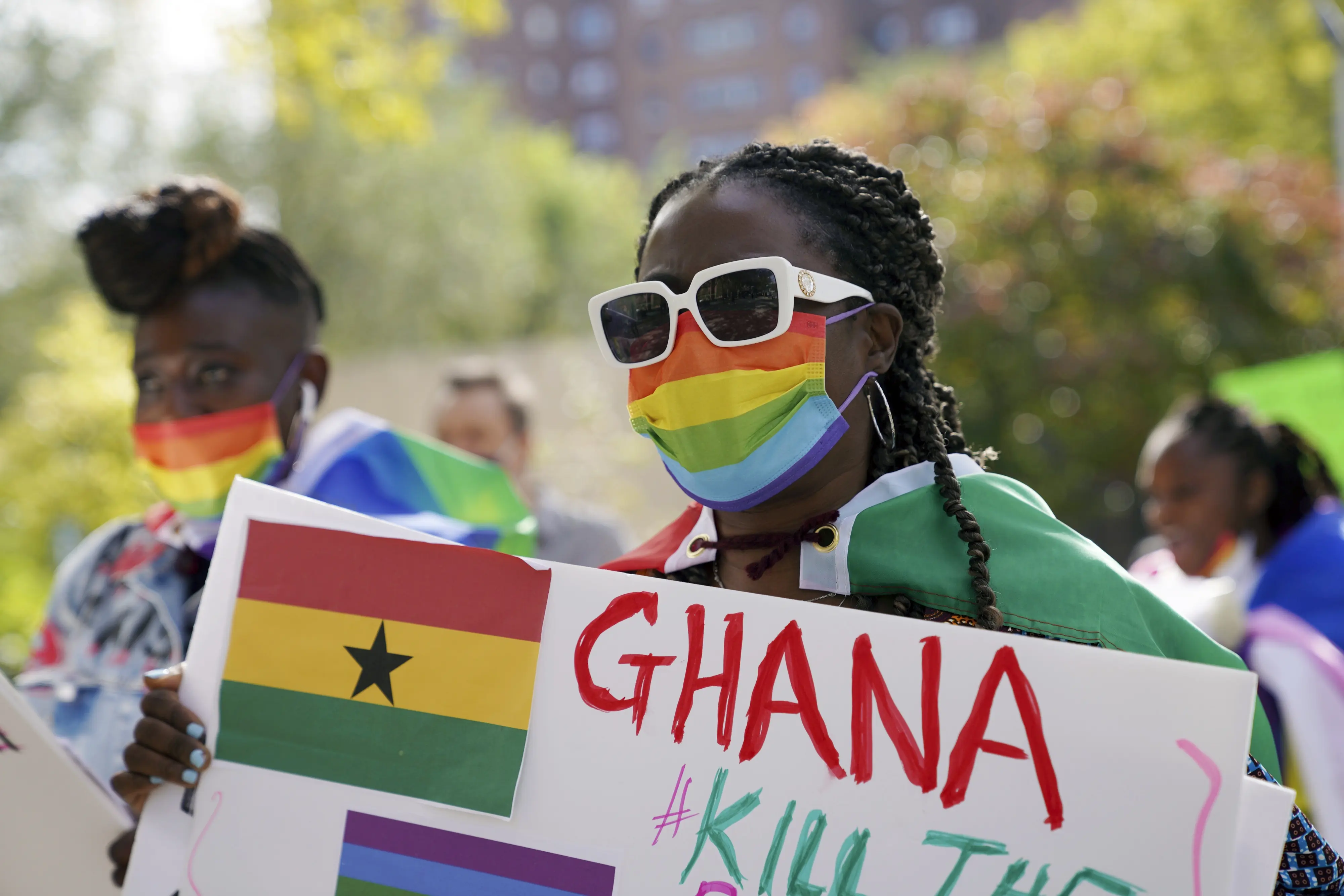
Ghana’s Supreme Court upheld a colonial-era law that criminalizes consensual same-sex relations, according to Human Rights Watch. This decision comes as the nation faces increasing controversy over a new bill that would intensify the persecution of sexual and gender minorities.
Human Rights Watch’s interim LGBT rights director, Rasha Younes, criticized the ruling, noting that it perpetuates the legacy of British colonial laws that criminalize “unnatural sex.” “The court’s decision disregards the constitutionally protected rights to privacy and personal liberty, which are fundamental under both national and international law,” Younes said.
Ghana’s constitution guarantees respect for human dignity, personal liberty, and privacy for all citizens. Despite these protections, violence and discrimination against LGBT individuals have surged in recent years, partly fueled by discussions surrounding the new anti-LGBT bill.
The lawsuit challenging the law was filed by Prince Obiri-Korang, a law lecturer at the University of Ghana. The contested provision, Section 104(1)(b) of the Criminal Offences Act 1960, criminalizes “unnatural carnal knowledge” of a person aged sixteen or older, with consent. This term is defined as “sexual intercourse in an unnatural manner or with an animal,” a definition the Supreme Court has interpreted to include the use of sex toys.
The court’s ruling aligns with language from the controversial Promotion of Proper Human Sexual Rights and Ghanaian Family Values Bill, 2021. This bill seeks to impose stricter penalties and broaden the scope of criminalization for LGBT individuals and their supporters. It increases the maximum penalty for same-sex acts from three to five years and extends criminal charges to those identifying as LGBT, queer, pansexual, or other non-traditional identities. The bill also targets supporters of LGBT rights, imposing penalties for providing support, funding, or advocacy for these communities.
Introduced in 2021, the bill has faced significant opposition from key figures in Ghana. Roman Catholic Cardinal Peter Turkson and former Member of Parliament Samia Nkrumah, daughter of Ghana’s first president Kwame Nkrumah, have publicly denounced the bill. Nkrumah described the proposed legislation as “brutal, harsh, and unjust” and urged President Nana Akufo-Addo to veto it.
Despite this opposition, Ghana’s parliament passed the bill in February 2024, and it now awaits President Akufo-Addo’s signature.
Jones Blantari, a chief superintendent of Ghana’s police force, previously criticized the vagueness of the term “unnatural carnal knowledge,” stating that it complicates consistent interpretation and enforcement. Blantari also noted that the law has been used to target LGBT individuals disproportionately.
Human Rights Watch has condemned the Supreme Court’s decision, stating that it fails to address the harmful legacy of colonial-era laws and highlights the need for the President to reject the new bill. “The court missed an opportunity to challenge outdated and discriminatory laws,” Younes said. “The President’s veto is crucial to prevent further violations of basic rights for LGBT people in Ghana.”
As Ghana navigates this critical juncture, the ongoing debate underscores the tension between colonial legacies and contemporary human rights standards. The outcome of this debate will significantly impact the country’s approach to LGBT rights and personal freedoms.
Discover more from Global-360 Africa
Subscribe to get the latest posts sent to your email.